hypermobility in premature babies
Hypermobility Symptoms and Effects. Pubic symphysis dysfunction is also commonly encountered in hypermobiles.

How To Recognise Joint Hypermobility In Your Child My Strong Little Body
We are at our most flexible as babies and become less flexible with age.

. Children who have hypermobility disorder might experience it in one or more joints and might say they have loose joints or describe themselves as double jointed. EDS occurs in about one out of every 5000 babies born worldwide. Some genetic syndromes such as Down syndrome or Marfan syndrome can be linked with hypermobility so it is important that people with hypermobility in four or more joints talk to.
Hypermobility means a persons joints move beyond a normal range of motion. Some children show symptoms of hypermobility in four or more joints and might experience pain as a result. Home babies hypermobility in wallpaper.
ROP can lead to vision loss if retinal detachment occurs. Infants and toddlers with joint hypermobility may. Low back and pelvic pain is a common symptom in pregnancy.
Be late learning to sit sit with a very rounded back or W-sit Skip crawling and bottom shuffle instead Hate tummy time Have tight hip muscles which affects crawling walking and balance Avoid activities that are. Bend a little finger back more than 90 degrees. Increased instability of the sacroiliac joints may be responsible for pelvic pain in pregnancy.
Most children with EDS have hypermobile joints that are prone to full or partial dislocation. It is more common in children born prematurely with those born earliest being at highest risk. We commonly use the words - bendy flexible loose or double-jointed to describe hypermobile joints.
If the infant is hypermobile and also cautious she may not kick and reach vigorously and not develop the muscle strength needed to support the hypermobile joints and get them ready for rolling and sitting up. It affects 7 10 of school age children in the UK. Keep legs higher than your hips at rest and avoid crossing your ankles.
Red flag features are present. Joint hypermobility is more common in females than males. 4 points hypermobility likely.
Hypotonia Hypotonia Occupational Therapy Kids Pediatric Occupational Therapy Pin On Kalev. Hypermobile low tone and premature infants may be less active and fail to develop good muscle strength. Usually this wont be a problem and they develop as they should however for some they may need to see a specialist physio to ensure they are able to develop as they should.
Hypermobility is the excessive movement flexibility in our joints. Hypermobility refers to the ability of a joint to move through a greater than normal range of motion. It depends on a number of factors including genetics age and racial background.
Your childs joints regularly dislocate. The older you are the less likely it is you will be hypermobile. Consider referring children with hypermobility for specialist assessment using clinical judgement to determine the urgency if any of the following are present.
In rare cases hypermobility in children is related to inherited disorders such as Ehlers-Danlos syndrome and Marfan syndrome that cause abnormalities in connective tissues. ROP occurs due to abnormal vessel growth in the eyes because a baby who is premature may not have finished this process in the womb. While standing put hands flat on floor while knees stay straight.
45 Hyperextensibility of the skin easy bruising psychological dysfunction psychosocial impairment and emotional problems are common. Retinopathy of prematurity also known as ROP is one of the most common problems preemie babies face. Hypermobility in premature babies Thursday March 17 2022 Edit.
Your child often gets sprains or strains or talks about pain or stiffness in joints or muscles. Some babies will be super flexible their joints and muscles are developing and this can mean they flex more than we would expect them to. Premature infants and infants with joint hypermobility low muscle tone breech delivery and a stressful newborn period often follow a different developmental pathway.
The focus is on clinical signs or investigations which reliably allow children with a Heritable Disorder of Connective Tissue HDCT and mild musculoskeletal impairment to be distinguished from children who fall within the normal. However there are several causes of hypermobility and many children with hypermobile joints do not have EDS Many children with EDS also have soft fragile skin and bruise easily. Ds1 does also have low muscle tone.
Most people with Joint Hypermobility can think of other family members who are flexible because the condition runs in families. Affected infants of mothers with classical- and hypermobility-type EDS have higher rates of premature rupture of membranes 1425 and precipitous deliveries. Connective tissue is made up of collagen which is flexible but strong.
It is extremely common in children having being reported in 25 to 50 of those younger than 10 years of age. The presence of hypermobility is one of several factors associated with developing lower back pain. Bend a thumb backwards to touch your forearm.
Severe hypermobility that impacts on daily activities and mobility for example subluxationdislocation. In this review we aimed to identify the current literature pertaining to the diagnosis of children with joint hypermobility. You can help by playing with your baby talking to them and helping them to do new things such as rolling over or sitting up.
According to ds1s physio the real harm of the w-position is caused where a childs hypermobilitylow tone is neurological ie the brain reacts too slowly to damaging over-stretching of muscles and ligaments that would not otherwise be naturally that stretchy. When this affects many joints and is associated with pain it is called a hypermobility syndrome. Symptoms of joint hypermobility in babies.
Many children are hypermobile double jointed in one or more joints. A common symptom of pregnancy this is caused by fluid leaking into the body tissues and leads to swelling of the feet lower legs hands and less commonly other parts of the body such as the face vulva and tummy. Cerebral palsy is a group of conditions that mainly affects movement and co-ordination.
Hypermobility refers to an increased range of movement in multiple joints for their age. To understand how this happens lets start with some simple anatomy Our joints are held together by connective tissue namely the joint capsule and various ligaments. The main clinical features are joint hypermobilitylaxity joint pains and recurrent joint dislocationssubluxations occurring spontaneously or with minimal trauma which can be acutely painful.
There is diagnostic uncertainty. Cerebral palsy affects how the brain sends messages to other parts of the body. But if your child has one or more of the following symptoms then you should see your GP as it may point to joint hypermobility syndrome.
It is estimated 15 of the population in Australia has. 4 points and pain in 4 or more joints for at least 3 months joint hypermobility syndrome likely.

Pin On Products

Joint Hypermobility In Babies And Children Emma S Diary

My Child Has Been Diagnosed With Low Muscle Tone What Does This Mean Low Muscle Tone Pediatric Physical Therapy Muscle Tone

Floxed By Cipro Magnesium Probiotics Might Be The Answers Probiotics Ehlers Danlos Syndrome Ehlers Danlos Syndrome Types

How Hypermobility And Low Muscle Tone Affect Your Baby S Development Skills For Action

Hypermobility Syndrome Therapies For Kids
Mckie Thumb Splint Pediatric Sizes P4 P5 P6 3 To 12 Years In 2022 Thumb Splint Plexus Products Pediatrics

How Hypermobility And Low Muscle Tone Affect Your Baby S Development Skills For Action

Neonatal Presentation Of Ehlers Danlos Syndrome Kyphoscoliotic Type A Download Scientific Diagram

How Hypermobility And Low Muscle Tone Affect Your Infant 39 S Development Skills For Action Low Muscle Tone Muscle Tone Hypermobility

Pin On My Invisible Journey
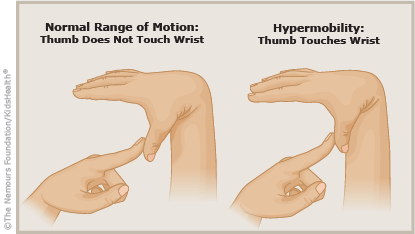
Kidshealth A To Z Benign Joint Hypermobility Syndrome Akron Children S Hospital

How Hypermobility And Low Muscle Tone Affect Your Baby S Development Skills For Action

How Hypermobility And Low Muscle Tone Affect Your Baby S Development Skills For Action
How Hypermobility And Low Muscle Tone Affect Your Baby S Development Skills For Action

Pin On Products

Pin On Products

How Hypermobility And Low Muscle Tone Affect Your Baby S Development Skills For Action

Pin On Kalev